
The Power of Play: Why Toys and Play Matter for Your Child’s Development
By a Pediatric Physical Therapist and Occupational Therapist
Play is so much more than a time filler for kids! For children, play is one of the most important ways they learn about the world, develop new skills, build relationships, and gain confidence in their abilities. From tummy time and reaching for a favorite rattle to building towers, climbing at the playground, and pretending to cook a meal, every playful moment offers an opportunity for growth.
As pediatric physical and occupational therapists, we see firsthand how meaningful play experiences help children develop the skills they need for everyday life. The best part? You don’t need an elaborate playroom or expensive equipment to make a difference. With a few toys, a little creativity, and opportunities to explore, everyday play can support development in powerful ways.
Why Is Play So Important?
Play provides children with opportunities to practice skills naturally, at their own pace, and in ways that are motivating and enjoyable. It supports development across multiple areas, often all at once!
1. Building Gross Motor Skills
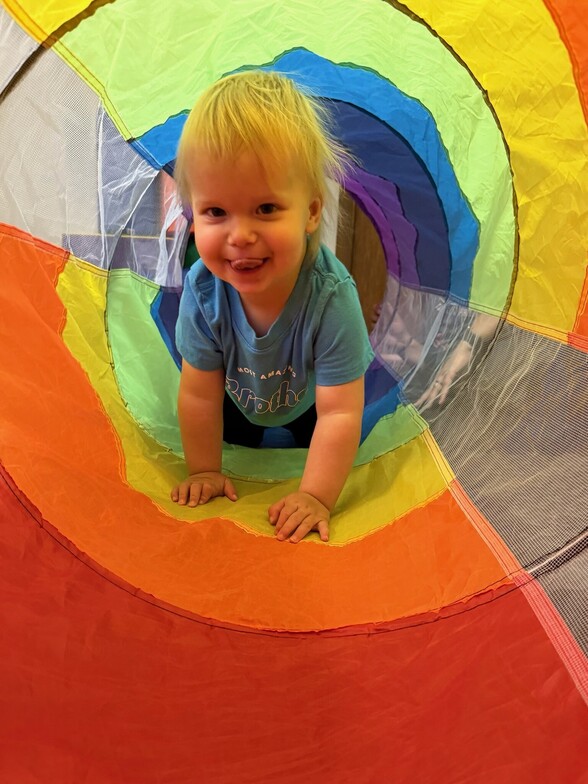
Gross motor skills involve the large muscles of the body that help children move, balance, and navigate their environment. Activities such as crawling through tunnels, climbing over cushions, kicking balls, riding push toys, and practicing on playground equipment help children develop:
- Strength and endurance
- Balance and coordination
- Motor planning and body awareness
- Postural control
- Skills for major milestones such as: rolling, crawling, standing, walking, running and jumping
Play idea: Play 'The floor is lava' and create a simple obstacle course using couch cushions, pillows, tunnels, or stepping stones.
2. Developing Fine Motor Skills
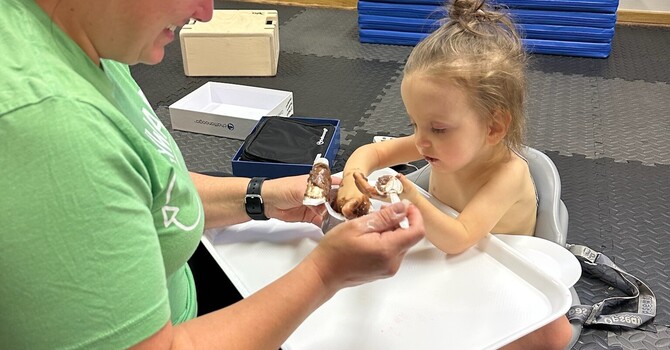
Fine motor skills involve the smaller muscles of the hands and fingers. These skills help children manipulate toys, feed themselves, draw, dress, and eventually participate in classroom activities. Toys such as blocks, stacking cups, puzzles, play dough and lacing beads help achieve the following skills:
- Grasping and releasing objects
- Using both hands together
- Developing finger strength and coordination
- Improving hand-eye coordination
- Developing precision and dexterity
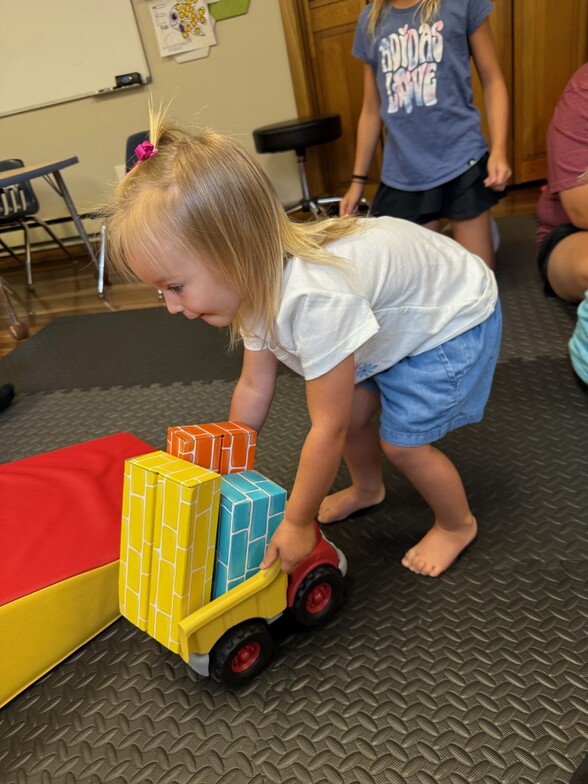
Play idea: Build a tower together using blocks. Encourage your child to pick up each block, position it carefully, and knock the tower down. This simple activity works on grasping, coordination, visual attention, turn taking and problem-solving.
3. Supporting Sensory Processing
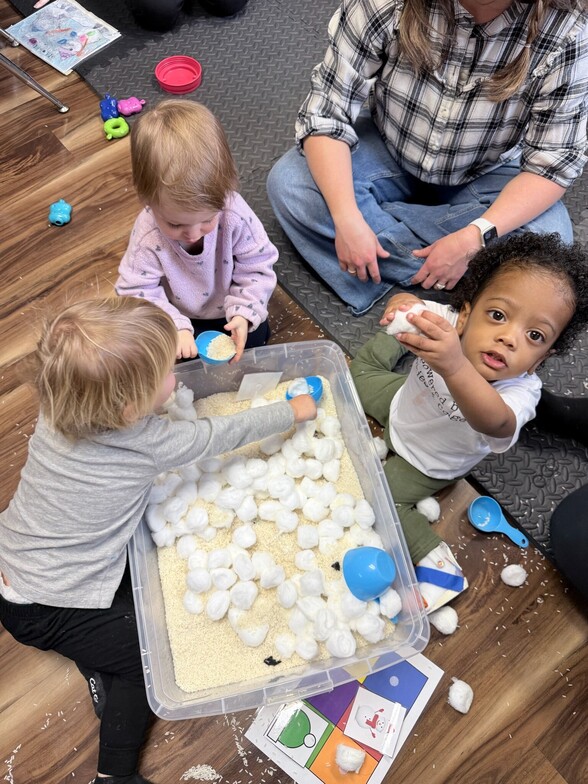
Children learn through their senses. They explore textures, sounds, movement, sights, and the physical sensations they experience while interacting with their environment. Sensory-rich play can help children explore their preferences, build body awareness, and participate more comfortably in daily routines.
Some examples include:
- Water play with cups, funnels, and floating toys
- Exploring play dough or other age-appropriate textures
- Playing with sand or rice
- Dancing to music or exploring movement through swinging, rocking, squeezing or crashing
Play idea: Set up a supervised water-play activity with a shallow container, cups, spoons, and floating toys. Your child can scoop, pour, reach, and explore while practicing coordination and engaging with different sensory experiences. Remember that every child responds differently to sensory input. Offer choices, respect signs of discomfort, and allow your child to participate at their own pace.
4. Encouraging Cognitive and Communication Development and Problem-Solving
Play gives children opportunities to experiment, make decisions, discover cause and effect, and figure out how things work. Puzzles, shape sorters, blocks, pretend-play sets, and simple games can encourage children to:
- Solve problems
- Practice attention and persistence
- Understand cause and effect
- Develop memory and flexible thinking
- Learn early academic concepts such as shapes, colors, sizes, and numbers
Play idea: Using a shape sorter toy, hand them a toy and have them try to figure out which slot it fits into. Or, purposefully hand them the 'wrong piece' to a puzzle and see what they do!
What Makes a Toy a Good Developmental Toy?
It is easy to assume that the newest, most expensive, or most complicated toy will provide the greatest developmental benefit. In reality, many simple toys offer wonderful opportunities for learning.
When choosing toys, consider the following:
- Open-ended play: Choosing toys that your child can use in a variety of ways encourages creativity and exploration
- The right developmental challenge: Choose toys that are engaging without being consistently frustrating. A good toy invites your child to try, explore, and practice
- Opportunities to move: Balls, tunnels, ride-on toys, and climbing equipment can encourage active play when appropriate for your child's abilities
- Opportunities for connection: Toys that encourage you to play together can support communication, joint attention, and bonding
- Your child's interests: Children are often more motivated to practice skills or try something new when activities involve things they already love
And remember: the toy itself is only part of the experience. How a caregiver engages with a child, adapts the activity, and follows the child's interests can make a big difference!
Do You Need Special Therapy Equipment at Home?
Not necessarily! Many developmental skills and therapy goals can be supported through everyday play with household items and toys you already own. Pillows can become stepping challenges. Laundry baskets can become pretend cars. Plastic containers can become stacking toys. A favorite stuffed animal can become the star of a pretend-play adventure!
A Few of Our Favorite Toys and Pieces of Equipment:
There is a downloadable PDF with pictures and clickable links also provided below!
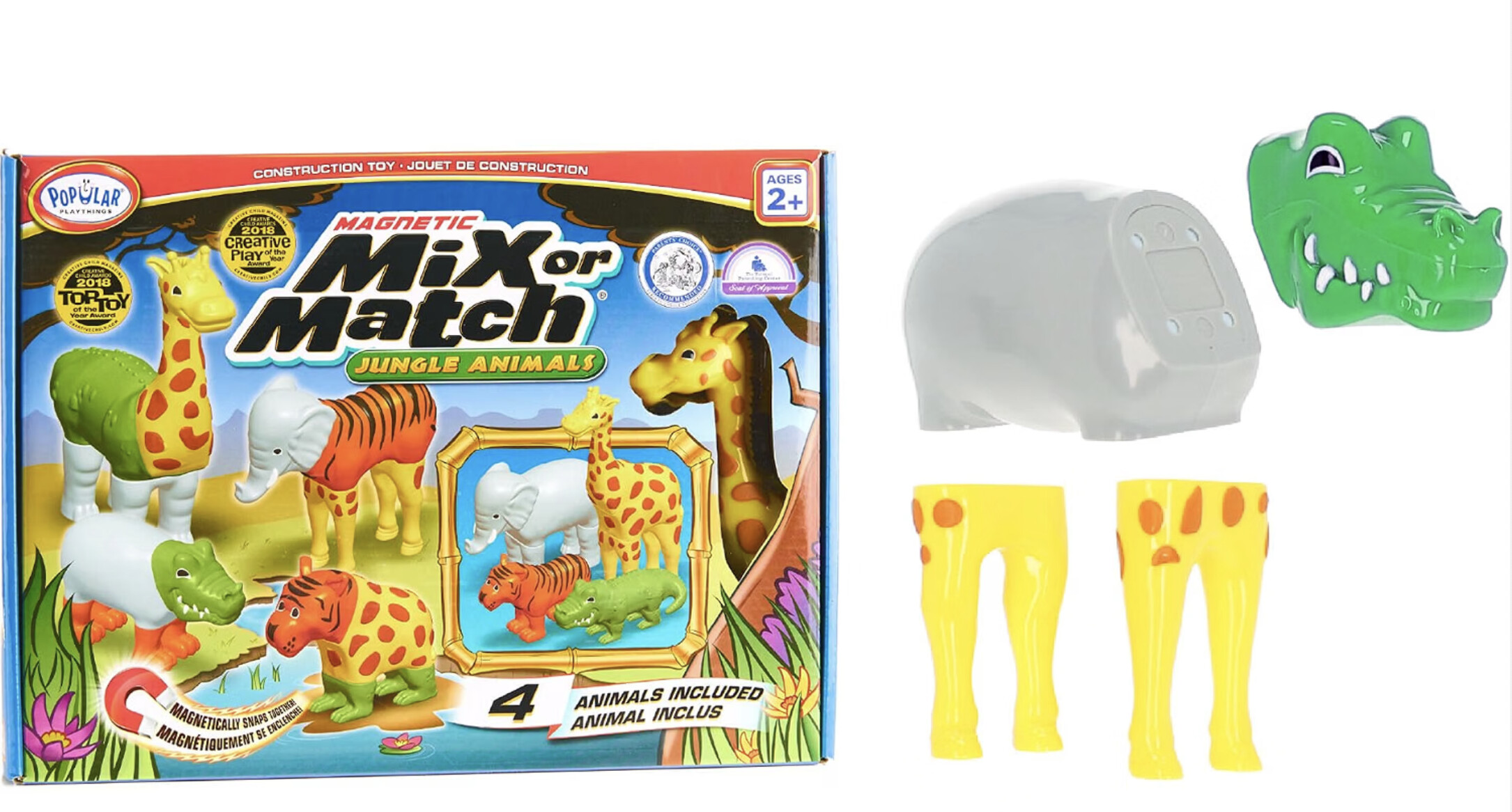
1. Mix or Match Animal Magnetic Toys: We love to use these toys while playing in prone (on your belly), as part of obstacle courses and are great for working on early speech sounds.
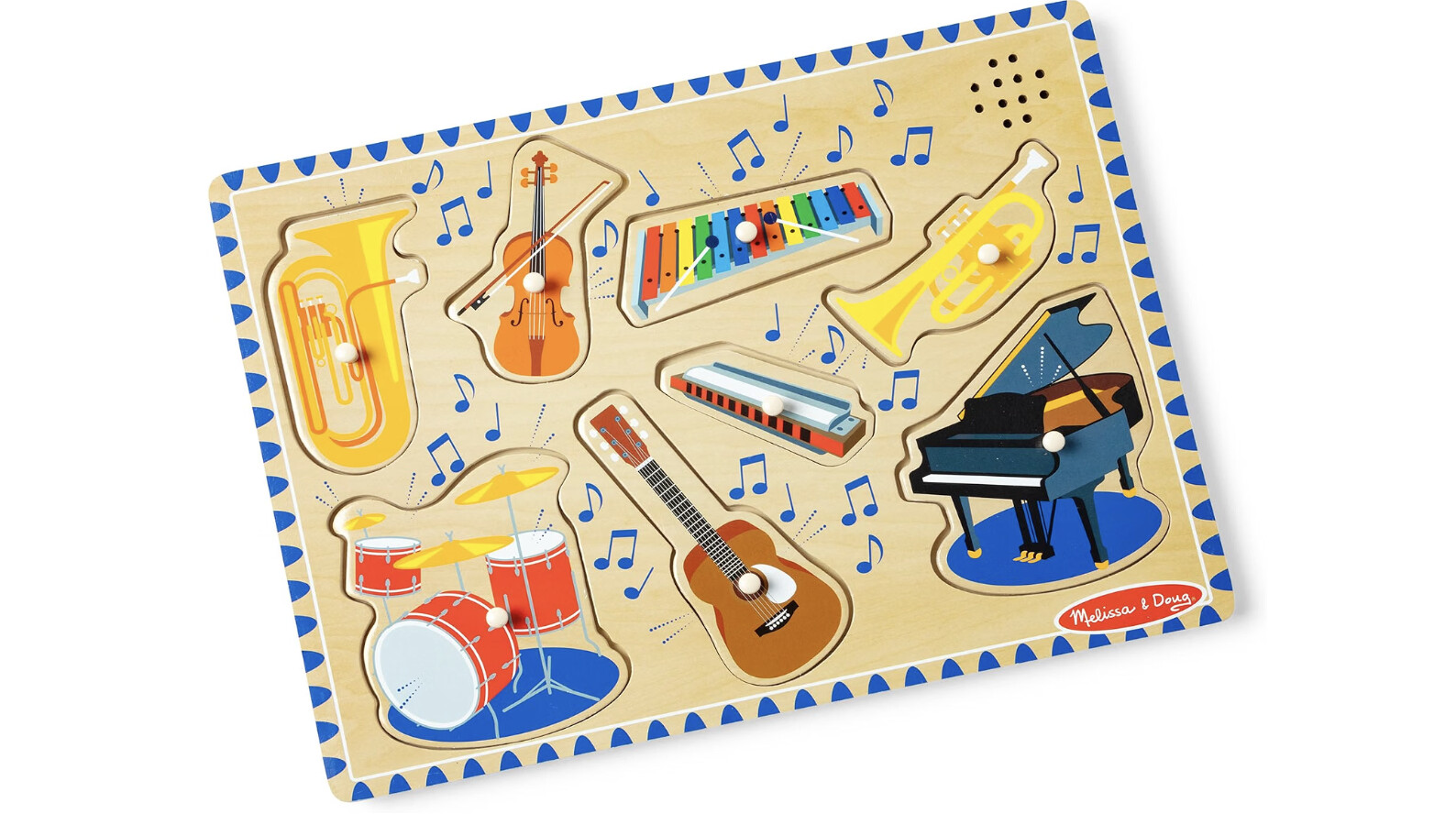
2. Melissa and Doug Sound Puzzles: These interactive puzzles are so fun and agreat way to target fine motor skills! We love using puzzles to encourage different play positions such as on your belly or on your knees!
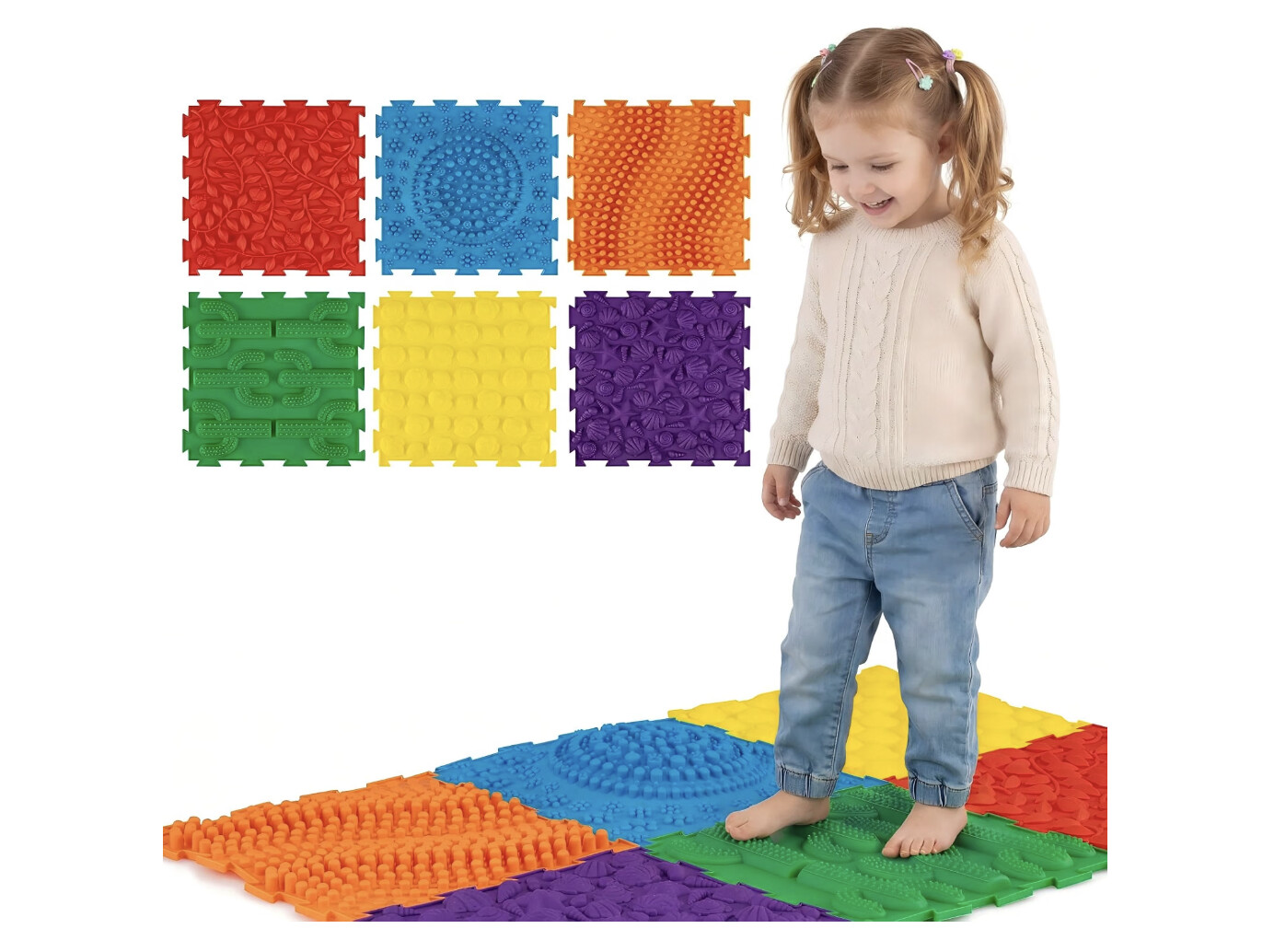
3. Tactile Sensory Floor Tiles: An absolute fan favorite! We use these as part of obstacle courses, for increased sensory input to the feet or hands, as targets or giving boundaries for sitting/standing in one spot…the possibilities are endless with these!
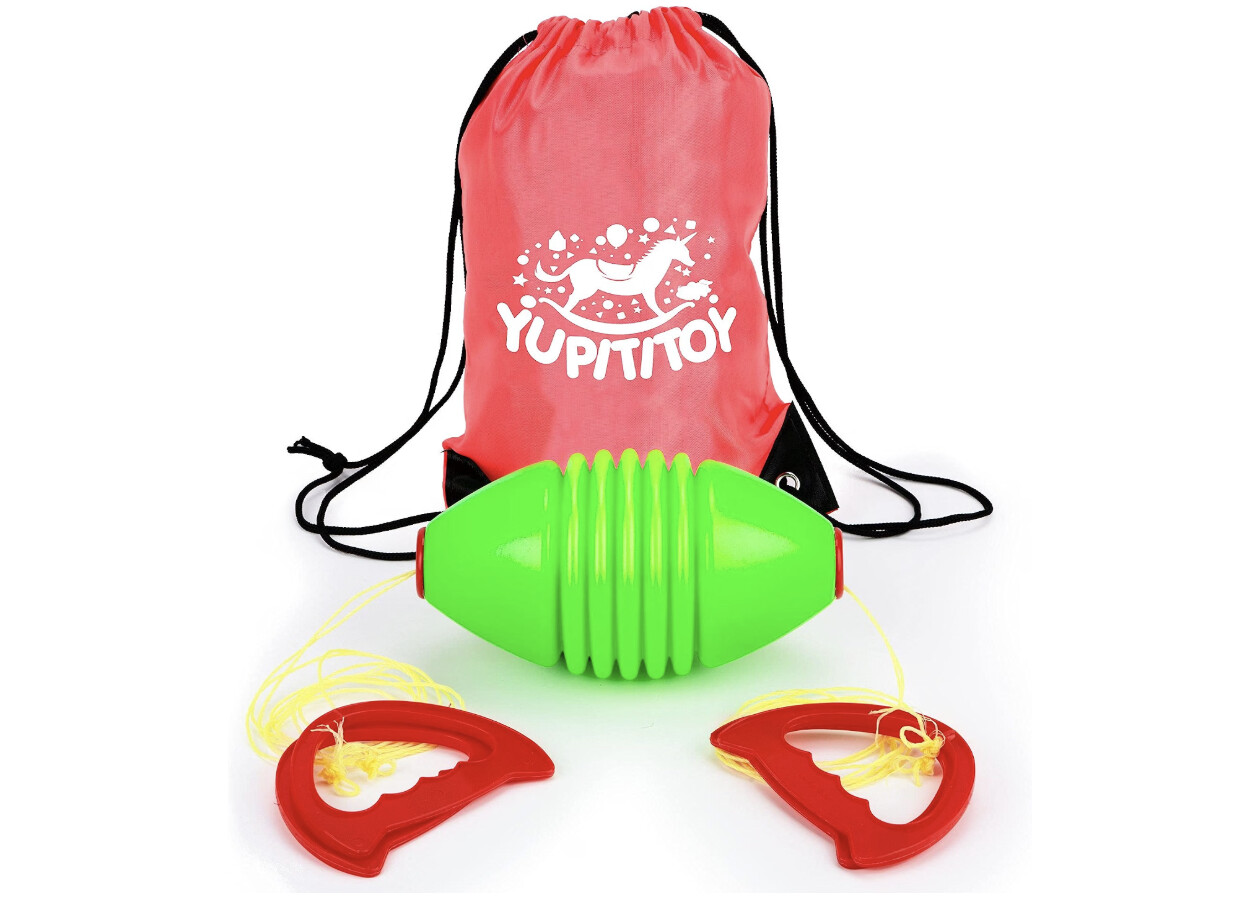
4. Zoomball: Zoomball is a great way to work on upper body strengthening and hand-eye coordination! Make it more difficult by standing on a dynamic surface or by doing it in a kneeling position!
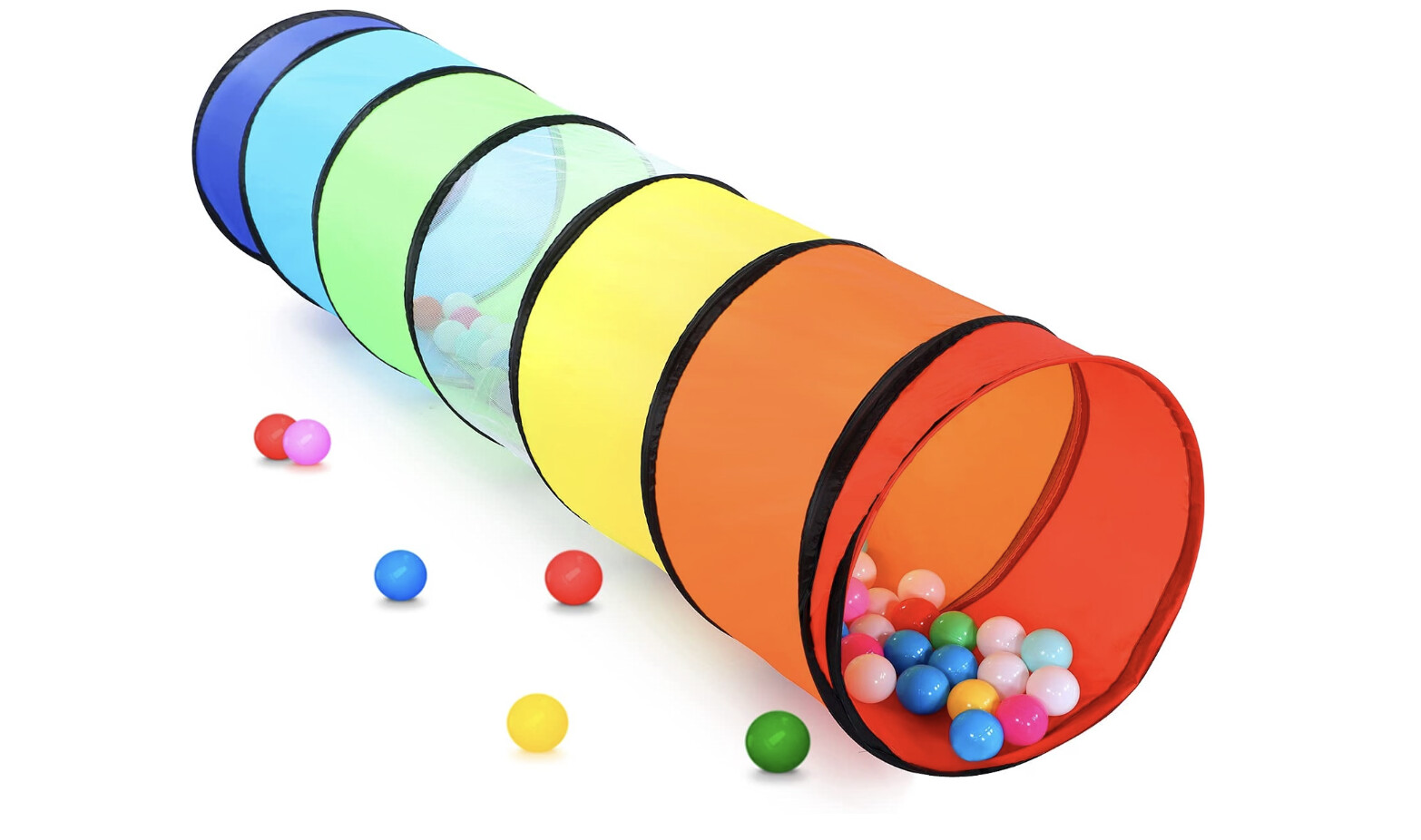
5. Play Tunnel: Tunnels are a great way to work on upper body strengthening by encouraging crawling. Use them independently or as part of a multi-step obstacle course!
How do I Play With My Child and Make it 'Therapeutic'?
Children learn through repetition, exploration, and meaningful experiences. You can encourage skill development while keeping play fun and child-led. Here are a few simple strategies to try:
- Follow their lead and use their interests
- When in doubt, simplify the activity or materials
- Try previously mastered skills or concepts in a new environment
- Have fun yourself! Afterall, kids are watching you more than listening to you and will imitate what they see
We understand that in 2026, there is information and consumer overload and the once simple idea of 'play' can feel so overwhelming to parents! We are here to encourage you and hopefully simplify the concept of play!
With Love,
Whitney and Lara
A Quick Note About Safety
Always choose toys and equipment appropriate for your child's age, developmental abilities, size, and individual needs and follow all manufacturers guidelines. Supervise play, particularly around water, climbing equipment, small objects, and materials that may present choking hazards. If your child has specific developmental or medical needs, ask their therapy team which activities and equipment are appropriate.
This article is for educational purposes and is not intended to replace individualized medical or therapy advice.

Whitney Williams
Contact Me