
An Introduction to NISE-Stim Therapy
NISE-Stim, or Non-Invasive Spinal Electrical Stimulation, is an innovative therapeutic modality used by physical and occupational therapists to support patients with a variety of neuromuscular conditions, including: Spina Bifida, Cerebral Palsy, Spinal Muscular Atrophy, congenital hypotonia, and more. NISE-Stim was developed in 2017 by Gerti Motavalli, PT, MPT
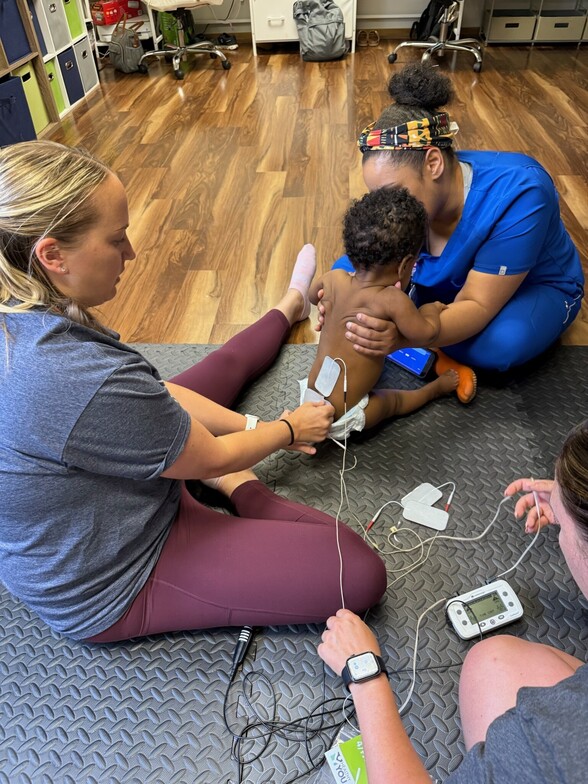
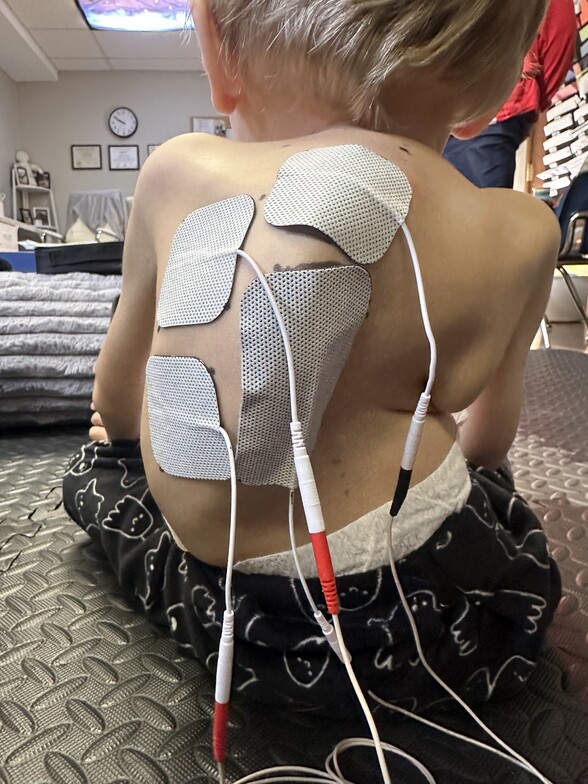
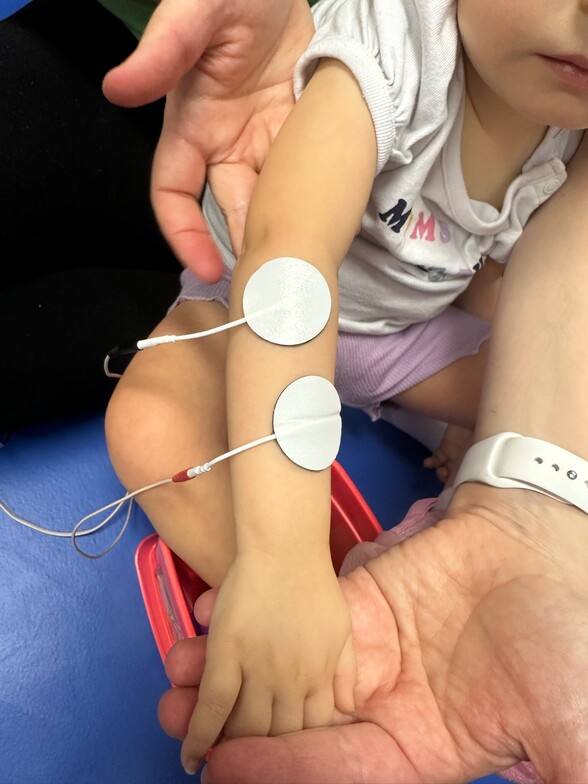
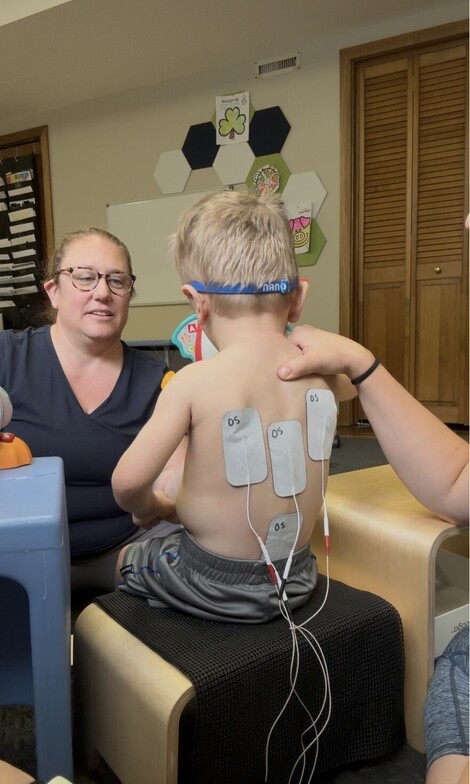
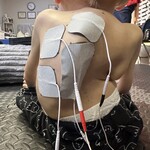
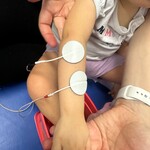
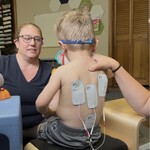
NISE-Stim uses surface electrodes and a safe electrical current to help connect the central nervous system to the peripheral nerves and muscles. Electrodes are placed along the spine and on targeted muscles in the trunk or extremities to help elicit a desired motor response. Depending on the child’s needs, stimulation may be used to encourage muscle activation, improve postural control/alignment, or help reduce excessive muscle tone that interferes with voluntary movement.
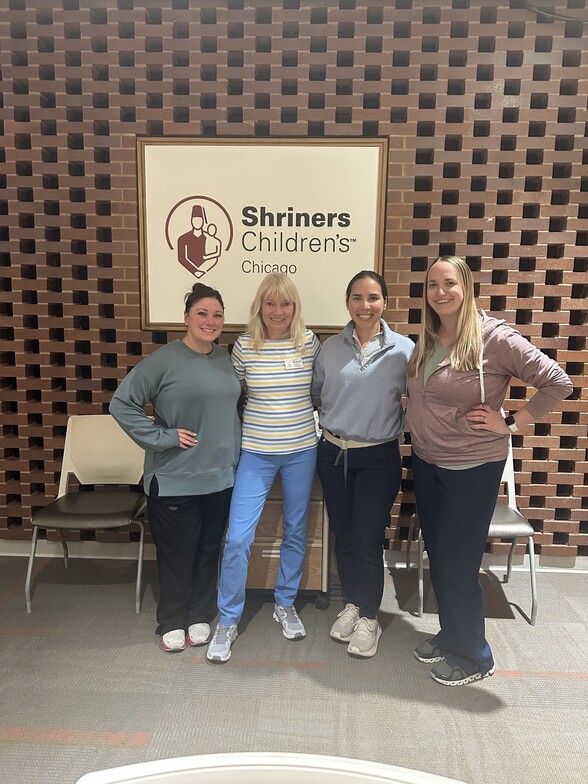
We began incorporating NISE-Stim into our clinic in March 2025 after traveling to Chicago to complete Level 1 certification training. This introductory course focused on the foundations of NISE-Stim, including nerve testing and functional application to the trunk and extremities. We even had the unique opportunity to stay with Gerti during the course, allowing us to gain additional insight directly from the founder herself!
In November 2025, Whitney traveled to Florida for advanced Level 2 training, which focused on postural alignment, trunk applications, and tone modulation strategies. During both training sessions, we practiced techniques on one another, experienced the stimulation firsthand, assisted in treating real patients, and completed extensive case study work. Experiencing the effects ourselves greatly enhanced our understanding of both the therapeutic process and patient experience.
Currently, Lara is certified in Level 1, and Whitney is certified in Levels 1, 2A, and 2B – the highest level of certification currently available.
Frequently Asked Questions
Does NISE-Stim hurt? What does it feel like?
No. NISE-Stim should never be painful. During the evaluation process, stimulation intensity is gradually increased to a comfortable therapeutic level. If discomfort occurs at any time, the intensity is immediately adjusted. Several treatment parameters can be modified to maximize comfort while achieving the desired therapeutic effect. The stimulation has been described as feeling like: “buzzing, vibration, pulsing or bouncing.” As a parent or caregiver, we encourage you to feel the stimulation on yourself prior to us using it with your child.
Can NISE-Stim be used if my child has limited or no sensation?
Yes. If there is any connection between the central nervous system and the muscles, NISE-Stim may help facilitate muscle activation and support the development of new neural pathways. Muscle responses are often visible or can be felt as twitching, pulsing, or contraction. For children who are nonverbal, we closely monitor body language and other nonverbal signs to ensure comfort and safety throughout treatment.
Is this the same as a TENS unit or traditional e-stim used for pain relief?
In some ways, yes, but there are important differences. Both TENS and NISE-Stim use electrical stimulation, but the treatment parameters and goals are very different. TENS is typically used at a sensory level for pain management, while NISE-Stim is often used at levels designed to facilitate muscle activation and neuromuscular re-education.
How do you know if NISE-Stim is working?
During the initial evaluation, testing is performed to determine whether NISE-Stim is appropriate for your child and to get a baseline of their response. Re-evaluations are typically completed every 3–6 months to monitor progress and response to treatment.Within a therapy session, improvements may be observed through changes in posture, alignment, muscle activation, movement quality, or responsiveness to other therapeutic activities. Your therapist will help explain these changes in real time during sessions.
How long does my child need to use NISE-Stim?
Because NISE-Stim is still a relatively new intervention, long-term research is still evolving. In general, it is considered a long-term therapeutic strategy used to support the nervous and musculoskeletal systems over time. Treatment protocols are individualized based on each child’s diagnosis, baseline function, and response to intervention. Your therapist will guide you in developing the most appropriate treatment plan and home program.
Do we need to purchase a machine for home use?
Depending on the goals for treatment and for best outcomes, a home machine is very beneficial to continue a NISE-stim home-program. However, many children benefit from using NISE-Stim only during therapy sessions. Even limited in-clinic use can help improve alignment, muscle activation, strength, and neuromuscular connections.Multiple different home units are available for purchase and are often HSA eligible, with prices generally ranging from $100–450. We primarily use the Chattanooga Continuum ™ machine which costs around $430.
Are there contraindications or research supporting this intervention?
Yes. As with any therapeutic modality, there are certain contraindications and precautions that your therapist will review during the consultation and evaluation process.Research on NISE-Stim continues to grow as more therapists incorporate it into practice and additional long-term data becomes available. The intervention was initially developed for children with Spina Bifida and has since expanded to support individuals with a wide range of neuromuscular diagnoses. Additional resources and research can be found at: SpinalStim Resources

Whitney Williams
Contact Me